
Lightspeed Integration
Prerequisites, setup, field mapping, testing, and troubleshooting for the Lightspeed connection.
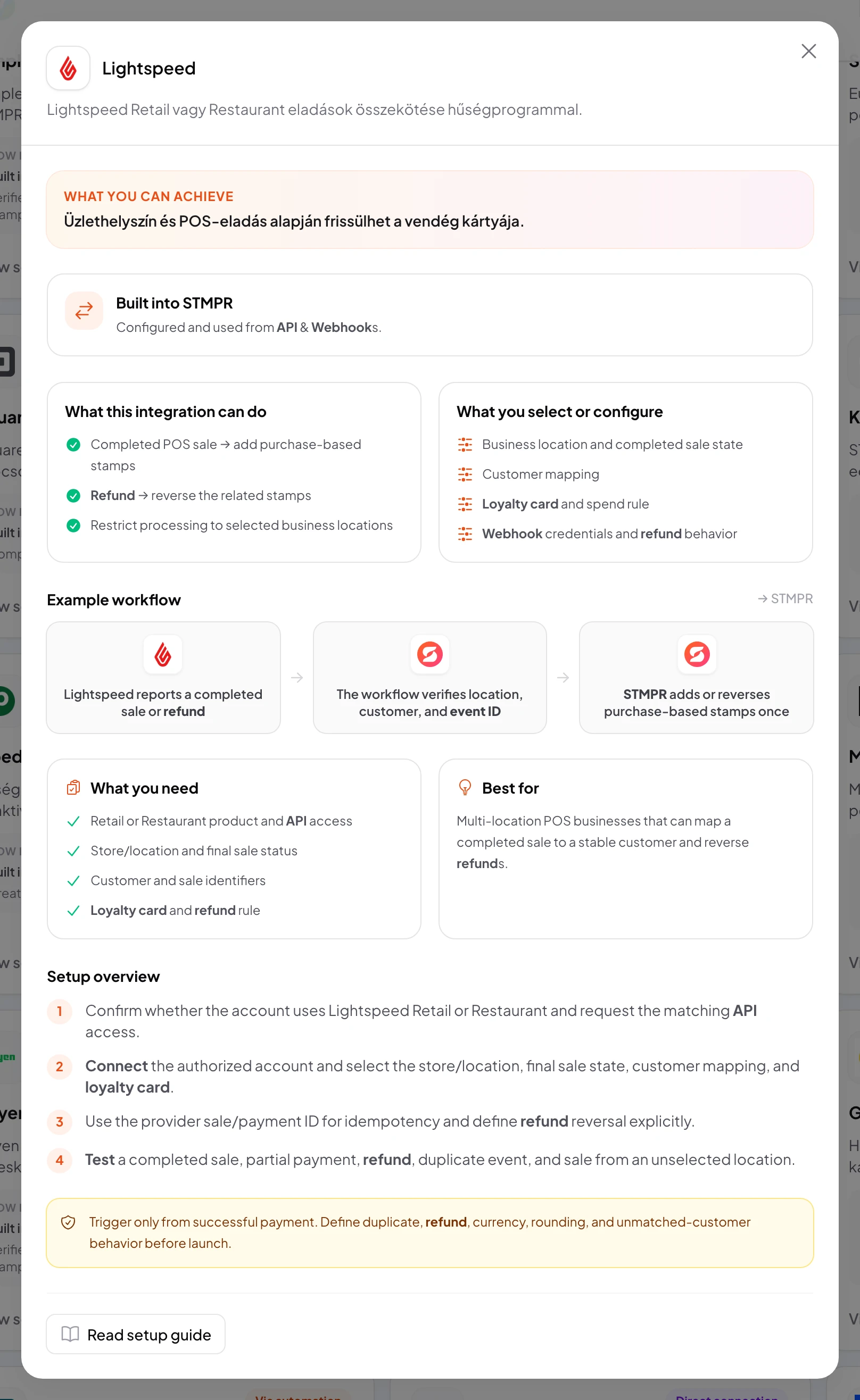
Use the Lightspeed integration to update the matched customer’s loyalty progress.
Data flows from the provider into stmpr.
Connecting the account does not activate a workflow by itself. Select the loyalty card, trigger, destination action, and customer matching rule separately.
Lightspeed
Image placeholder: Lightspeed: create the required access
https://stmpr.io/dashboard/integrations
Why use this?
Replace manual data transfers with a verified and observable workflow.
Idempotency prevents duplicate rewards, while consent gates protect marketing data transfers.
- 1A completed sale or refund
- 2Authentication, duplicate protection, and customer matching
- 3Update the matched customer’s loyalty progress
Step by step
- Prepare Lightspeed Retail or Restaurant API access and location identifiers.
- Create the required API, OAuth, or webhook access in Lightspeed with the narrowest practical permissions.
- In stmpr, open API & Webhooks and create an API key or a webhook. Lightspeed has no Connect action, so the link runs through Zapier, Make or your own integration, and it needs a plan that includes API access.
- In Zapier or Make, build the scenario: the trigger fires at the provider, and the destination action calls the stmpr API.
- Configure customer matching in the scenario. Prefer email or phone; use a provider ID only as a stable secondary key.
- Run a test with a test customer, then deliver the same event again. Pass a stable event ID, or duplicate protection has nothing to work with.
- Test failed delivery, revoked access, a missing customer, cancellation or refund, and consent withdrawal.
- After activation, check the first live events in the delivery log. To disconnect, disable the scenario before revoking the API key.
What you select and verify
- Trigger: a completed sale or refund
- Action: update the matched customer’s loyalty progress
- Loyalty card, business, or location
- Customer matching and required fields
- Consent, refund, cancellation, and no-show rules
- Test data, duplicate protection, and delivery log